
What Makes a Home Theater Feel Cinematic?
The Answer: Sound and Picture, Working as One
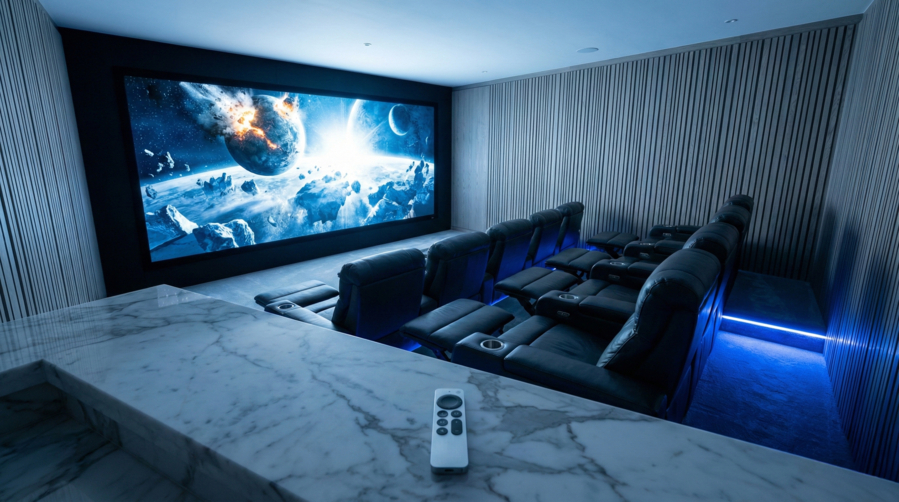
A massive screen alone doesn't make a home theater feel like the Cineplex across town, because without sound engineered to match it, even a stunning picture falls flat, and the room ends up feeling more like the traditional TV room you had growing up.
If you spend months choosing a screen size and picking out seating, then treating the speaker setup as a last-minute consideration does a disservice to your family's home entertainment experience. Audio and video should be planned in conjunction with one another, or the room never quite delivers as it should. Learn more about home theater design and AV planning below.
SEE ALSO: The Makings of an Immersive Home Theater Experience
Native 4K is Meant to be Experienced
Streaming apps compress video quality before it reaches your screen, which softens visual details and flattens color, even on a great high-end display. The Kaleidescape Strato K skips that step entirely with the new 4K Cinematic video format.
It plays downloaded movies in native 4K Ultra HD with HDR and lossless audio without compression. Available straight off the server, it preserves the picture and sound the filmmakers worked tirelessly to deliver, with instant playback and no buffering, unlike waiting for a streaming app to play catch-up.
The Display Matters as Much as the Source
Incredible native 4K detail only means something once it reaches the right display. Projectors are still what most custom theaters rely on, since they can throw a genuinely massive image onto the wall, though you need a room dark enough to keep dark colors dark rather than gray. TVs handle daylight and bright rooms much better and can hit higher peak brightness for HDR, but even a great one caps out well below the size most dedicated theater rooms want.
Resolution is only part of the picture. Contrast ratio and color accuracy do a lot of the work, along with HDR format support like Dolby Vision or HDR10+, in getting a scene close to what the filmmaker saw in the mastering suite. Calibration matters too. It's the difference between shadow detail you can make out in a dark scene and skin tones that look natural instead of slightly off, something an out-of-the-box picture setting rarely nails on its own.
Great Sound Creates an Emotional Impact
Picture quality tends to get most of the attention when people plan a theater or media room, but sound carries just as much of the emotional weight, if not more. A soundbar can play dialogue, but a premium speaker setup makes you feel it: a hushed line in a tense scene, an explosion that rattles the room, or a stadium going dead silent right before the snap. A soundbar was never built to do that.
A great pair of speakers still needs the right power behind it. Quality amplification paired with Dolby Atmos produces big, bold, dynamic sound that moves around the room, seemingly from all directions, rather than from the front wall where the screen is located. Effects pass overhead and behind you the same way they would in a commercial theater.
Designing the Room Around How You Watch
Your home theater doesn't have to look like anyone else's; maybe it's a finished basement, a media room built from scratch, or a converted den. A room designed for a weekly movie night looks different than one built for hosting the game with a full house. Whatever it looks like, the layout still has to be planned. Seating distance and screen size heavily depend on the room's shape, and speaker placement depends on how your family uses the entertainment space.
Encore Audio Video Brings It All Together
If you're ready to see what a professionally designed home theater looks and sounds like in person, we're ready to help. Reach out to our team to schedule a consultation, or send us a message through live chat below.